
 TR
TR
 EN
EN


ABSTRACT
Objective
This study aimed to retrospectively investigate the risk factors affecting mortality in pediatric and adult patients with candidemia followed in the pediatric and adult intensive care units of Ankara Bilkent City Hospital.
Materials and Methods
The medical records of 101 pediatric (1 month-18 years) and 75 adult (≥18 years) patients diagnosed with candidemia between 2018 and 2023 were reviewed. Demographic data, Candida species distribution, antifungal treatment strategies, and mortality outcomes were evaluated.
Results
In our study, the number of pediatric patients was 101 (57.4%), while the number of adult patients was 75 (42.6%). In both pediatric and adult groups, non-albicans Candida species were the most frequently isolated pathogens, with rates of 56.4% and 54.7%, respectively. The seven-day and 30-day mortality rates were significantly higher in adult patients compared with pediatric patients (seven-day mortality: 37% vs. 8.9%; 30-day mortality: 14% vs. 7.6%; p< 0.001). In univariate analysis, catheter retention, mechanical ventilation, thrombocytopenia, and corticosteroid use were associated with seven-day mortality in both groups. In the adult group, the absence of antifungal therapy was additionally identified as an independent risk factor. In multivariate analysis, mechanical ventilation and thrombocytopenia were independently associated with seven-day mortality among the pediatric patients, while corticosteroid use was significantly associated with 30-day mortality. Failure to remove the catheter increased the risk of mortality by 48.6-fold in children (p< 0.001) and by 5.2-fold in adults (p= 0.015). Intubation increased mortality risk by 13.1-fold in pediatric patients (p= 0.004) and by 3.3-fold in adults (p= 0.022). The absenceof antifungal therapy increased the mortality risk by 43.5-fold in adults (p< 0.001).
Conclusion
Mortality rates were significantly higher in adult patients compared to pediatric patients. In both age groups, mechanical ventilation and steroid use emerged as major risk factors for increased mortality. These findings suggest that early initiation of empirical antifungal therapy, especially in high-risk patients, may help reduce mortality. Furthermore, timely catheter removal and closer monitoring of the patients requiring mechanical ventilation or steroid therapy may contribute to improved outcomes by reducing adverse consequences of candidemia.
KEYWORDS
Candida, intensive care unit, pediatric, adult, mortality
INTRODUCTION
Candidemia is the most prominent form of invasive candidiasis and has become an increasingly important healthcare problem, particularly in tertiary care hospitals (1). It is associated with high morbidity and mortality rates, especially among critically ill patients, immunocompromised individuals, and those with complex medical conditions (2). In the United States, candidemia accounts for approximately 22% of bloodstream infections, making it one of the leading causes; however, bacterial pathogens remain more common (3). The global incidence of candidemia has increased significantly in recent years, largely attributed to the widespread use of immunosuppressive therapies and broadspectrum antibiotics. Although Candida albicans remains an important pathogen, a shift from C. albicans predominance toward non-albicans Candida (NAC) species has been reported in many countries (4,5). This study aims to compare the clinical characteristics of candidemia in pediatric and adult patients admitted to intensive care units and to evaluate risk factors affecting mortality.
MATERIALS AND METHODS
This study was conducted among adult patients admitted to Ankara Bilkent City Hospital adult intensive care units (ICUs) and pediatric patients admitted to Pediatric ICUs of the Children’s Hospital. Adult patients aged 18 years and older who developed candidemia at least 48 hours after ICU admission were included in the study. Epidemiological and clinical data of the included patients were recorded retrospectively. The following parameters were recorded: Age, sex, presence of a central venous catheter, presence of a urinary catheter, intubation status, use of total parenteral nutrition, underlying diseases (diabetes mellitus, solid organ malignancies, hematological malignancies, solid organ transplantation, chronic obstructive pulmonary disease, acute/chronic renal failure, etc.), chemotherapy/radiotherapy within the last month, antibiotic use within the last month, immunosuppressive therapy within the last month, steroid use within the last month, presence of neutropenia within the last month, recent abdominal/extra-abdominal surgical procedures within the last month, antifungal prophylaxis status prior to candidemia, hemodialysis status, Candida species causing candidemia, antifungal susceptibility of the isolated species, and early mortality (within seven days) and late mortality (8-30 days) following candidemia. Laboratory procedures included a comprehensive approach consisting of automated blood culture incubation, Gram staining, colony subculture, germ tube testing, evaluation with commercial identification kits, and E-test susceptibility testing, following the guidelines of the Clinical and Laboratory Standards Institute and the European Committee on Antimicrobial Susceptibility Testing. Antifungal susceptibility testing was interpreted according to EUCAST v12.0 (2024) criteria. For fluconazole, C. albicans, Candida parapsilosis, and Candida tropicalis were considered susceptible at ≤2 mg/L and resistant at >4 mg/L; Candida krusei was considered intrinsically resistant to fluconazole. For echinocandins, a susceptibility breakpoint of ≤0.03 mg/L was used for C. albicans and Candida glabrata (6). Ethics approval for this study was obtained from the Ankara Bilkent City Hospital Clinical Research Ethics Committee No. 2 (Decision no: E2.Kurul-E2-21-69). Statistical analysis Statistical analyses were performed using IBM SPSS Statistics version 22. The normality of the parameters was assessed using the Kolmogorov-Smirnov test, which indicated that the data were not normally distributed. In addition to descriptive statistical methods [median, interquartile range (IQR), and frequency], the Mann-Whitney U test was used to compare quantitative data between two groups. For the comparison of qualitative data, the chi-square test, Fisher’s exact chi-square test, Fisher-Freeman-Halton exact test, and continuity (Yates) correction were applied. Multivariate analysis was performed using logistic regression with the backward stepwise method. Statistical significance was set at p< 0.05.
RESULTS
This study aimed to compare the clinical characteristics of
candidemia and the risk factors affecting mortality in pediatric
and adult patients admitted to ICUs. The findings revealed
significant differences between pediatric and adult patients. A
total of 101 pediatric (57%) and 75 adult (42.6%) patients were
included in the study. The age of pediatric patients ranged from 1 month to 18 years (mean: 6.4 ± 4.2 years), while adult patients ranged from 19 to 85 years (mean: 58.7 ± 14.9 years) (Table 1). In adults, underlying diseases (p= 0.032), hypotension (p= 0.014), steroid use (p= 0.001), urinary catheter use (p= 0.010), and intubation rates (p= 0.002) were significantly higher. In contrast, pediatric patients had higher rates of hospitalization within the past year (p= 0.008), fever (p= 0.021), surgical history (p= 0.016), and longer total hospital stays (p= 0.005) (Table 2).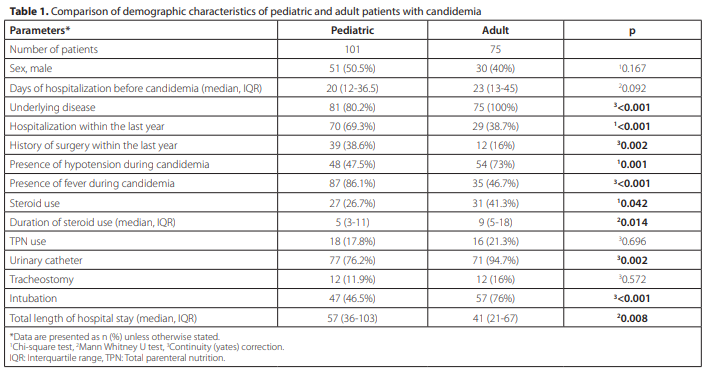
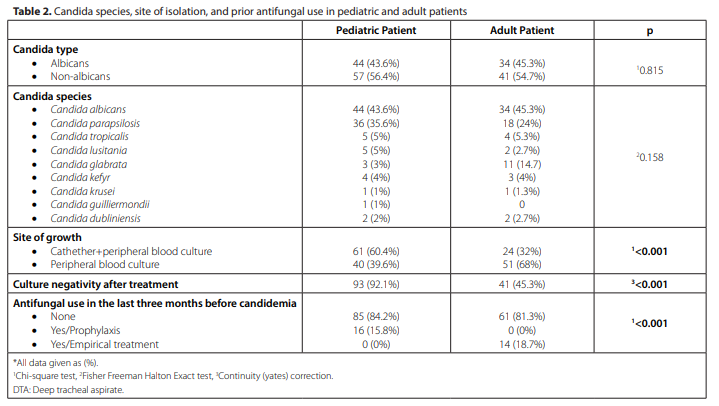
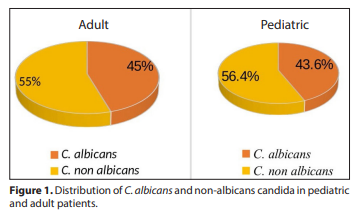
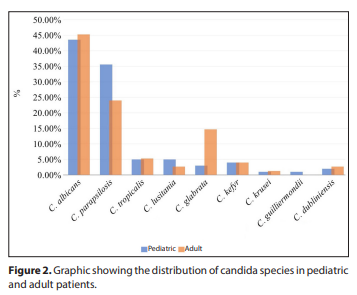
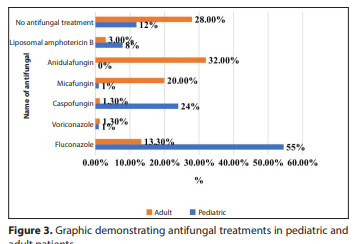
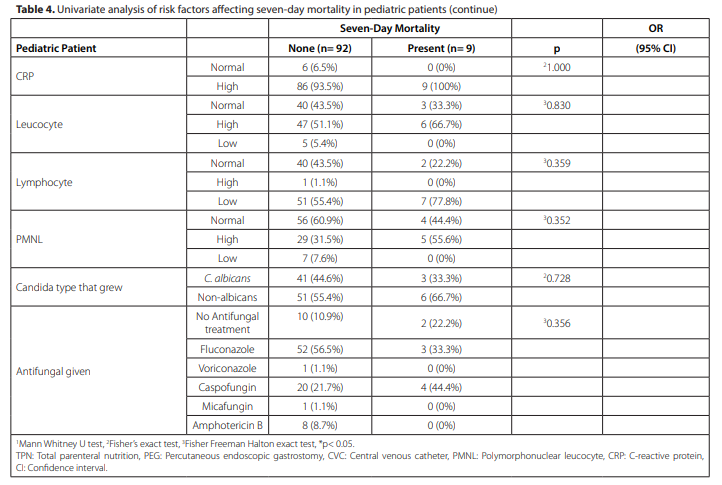
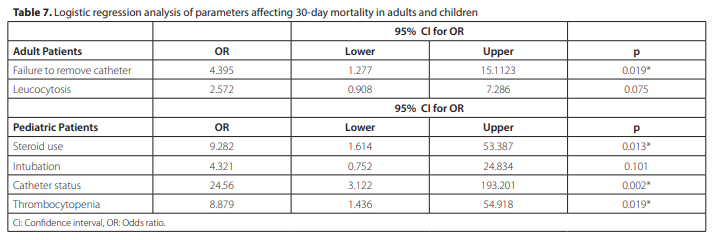
In both pediatric and adult patients, C. albicans was the most frequently isolated species (Figure 1). In adults, the rate of C. glabrata infection was significantly higher (14.7%, p= 0.007), whereas it was detected in 3% of pediatric patients. NAC species were isolated at rates of 56.4% in children and 54.7% in adults (Table 2, Figure 2). Regarding treatment, fluconazole and caspofungin were more commonly used in pediatric patients, whereas echinocandin group antifungals were preferred in adults. Fluconazole use was significantly more common in pediatric patients compared to adults (p< 0.001) (Table 3, Figure 3). Both seven-day and 30-day mortality rates were significantly higher in adult patients compared to pediatric patients (p< 0.001 for both) (Table 4). Factors associated with increased seven-day mortality included failure to remove the catheter, intubation, and thrombocytopenia. Failure to remove the catheter increased mortality risk by 48.6-fold in children (p= 0.001) and 5.2-fold in adults (p= 0.015); intubation increased mortality risk by 13.1-fold in children (p= 0.004) and 3.3-fold in adults (p= 0.022); and thrombocytopenia increased mortality risk by 7.7-fold in children (p= 0.009) and 11.4-fold in adults (p= 0.002) (Table 5). For 30-day mortality, failure to remove the catheter, steroid use, lack of antifungal therapy, and leukocytosis were identified as significant risk factors. Failure to remove the catheter increased mortality risk by 11.2-fold in children (p= 0.001) and 4.1-fold in adults (p= 0.018); steroid use increased mortality risk by 6.6-fold in children (p= 0.001); lack of antifungal therapy increased mortality risk by 43.5-fold in adults (p= 0.001); and leukocytosis was associated with a 2.5- fold increased mortality risk in adults (p= 0.040) (Table 4,5). In logistic regression analysis, the strongest predictors of mortality in pediatric patients were intubation [Odds ratio (OR): 13.1, confidence interval (CI): 5.2-28.3, p= 0.003], thrombocytopenia (OR: 7.7, CI: 2.8-19.4, p= 0.007), and failure to remove the catheter (OR: 48.6, CI: 12.1-109.3, p< 0.001).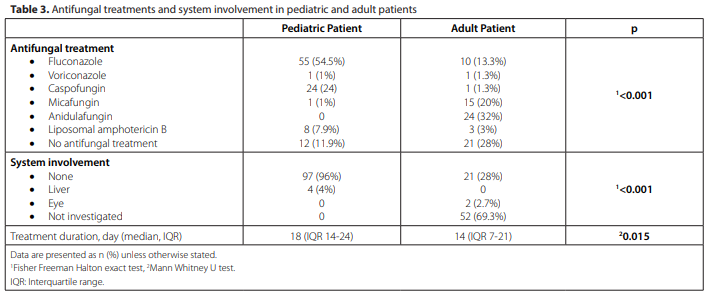
In adult patients, the most important predictors of mortality were lack of antifungal therapy (OR: 43.5, CI: 18.2-96.7, p< 0.001), leukocytosis (OR: 2.5, CI: 1.2-5.8, p= 0.035), and failure to remove the catheter (OR: 4.1, CI: 1.7-9.4, p= 0.012) (Table 6,7).
DISCUSSION
Candidemia is a complex infection associated with high mortality rates, particularly among intensive care unit patients, and poses significant challenges in treatment management. In our study, risk factors affecting candidemia-related mortality were evaluated in detail in both pediatric and adult patients. Our findings indicate that mortality determinants are associated with different clinical dynamics in these two age groups.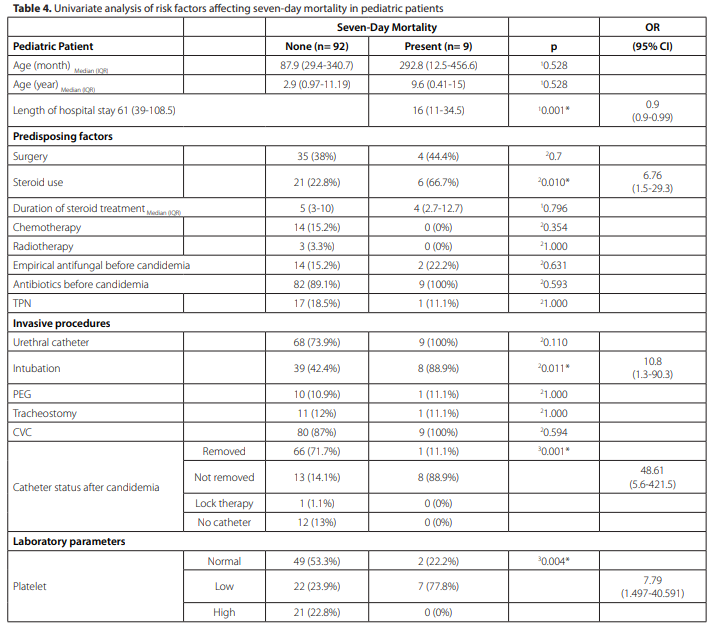
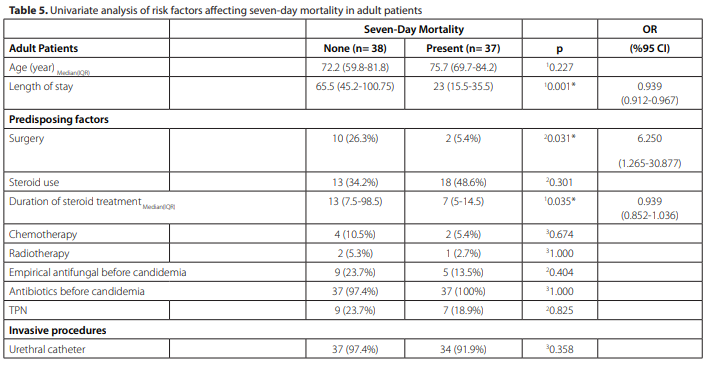
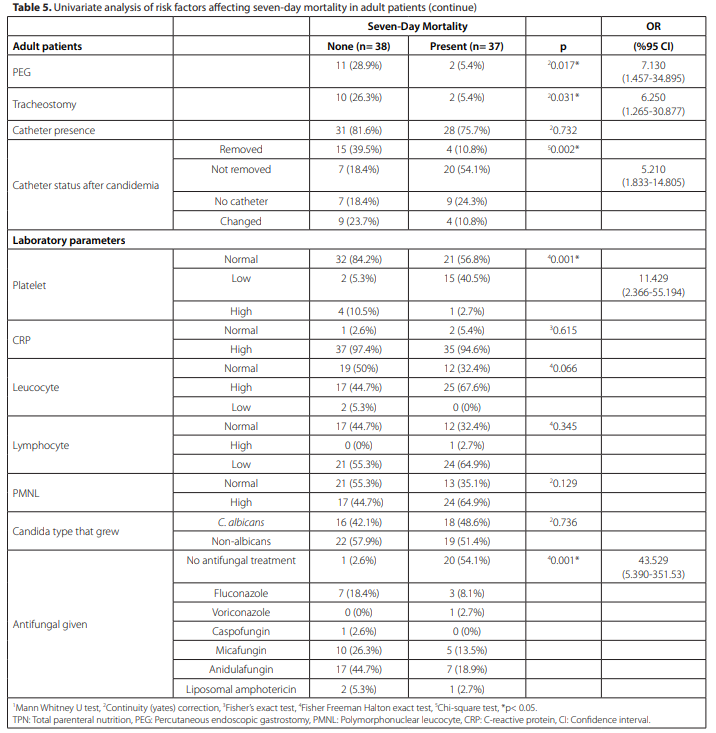

In adult patients, lack of antifungal therapy, failure to remove the catheter, mechanical ventilation, thrombocytopenia, and steroid use were significantly associated with mortality. These findings highlight the critical importance of early initiation of antifungal therapy and strict control of invasive interventions for improving survival. Consistent with the literature, delayed initiation of antifungal treatment has been reported to significantly increase mortality (7,8). In pediatric patients, failure to remove the catheter, requirement for mechanical ventilation, thrombocytopenia, and steroid use were associated with mortality; in multivariate analysis, intubation and thrombocytopenia were identified as independent predictors of early mortality. These findings may be explained by the suppression of the immune response and the increased difficulty in infection control due to invasive procedures. Similarly, Zaoutis et al. reported that mechanical ventilation and hematological malignancy were strongly associated with mortality in pediatric candidemia (9). In our study, failure to remove the catheter increased mortality by 48.6-fold in pediatric patients, compared to 5.2-fold in adults. This difference may be attributed to the greater difficulty of vascular access management and limited alternative access options in children. Large cohort studies by Nucci et al. and Puig-Asensio et al. also reported a strong association between failure to remove the catheter and increased mortality (10,11). In the adult group, absence of antifungal therapy increased the risk of mortality by 43.5-fold (p< 0.001). In a multicenter analysis conducted by Arendrup et al., initiation of antifungal therapy within the first 24 hours was shown to double survival rates (12). This finding supports the life-saving importance of timely initiation of appropriate treatment. Thrombocytopenia was significantly associated with mortality in both pediatric and adult patients. A multicenter prospective study conducted in Türkiye similarly identified thrombocytopenia as an independent risk factor for candidemia-related mortality, with significantly lower 30- day survival rates observed in patients with low platelet counts (13). This underscores the importance of considering hematological parameters in the pathophysiology of invasive fungal infections. Steroid use was particularly associated with 30-day mortality in the pediatric group. Systematic reviews on invasive fungal diseases have demonstrated that steroid therapy may increase mortality (14). There is also well-established evidence that glucocorticoids can worsen both the risk and outcomes of invasive fungal infections (15). Although mortality analysis based on species distribution did not show a significant difference in our study, the literature suggests that C. krusei and C. tropicalis infections are generally associated with higher mortality, whereas C. parapsilosis is associated with lower mortality (16). The higher mortality rates observed in adult patients compared to pediatric patients may have several explanations. Adult patients often have a higher burden of comorbidities (such as diabetes mellitus, chronic renal failure, malignancy, and organ failure), which complicates infection control and negatively affects response to antifungal therapy (7,8). In addition, sepsis, septic shock, and multiorgan dysfunction occur more frequently in adults, representing key factors contributing to early mortality (16). Another important factor is the delay in initiating antifungal therapy in adults, often due to waiting for diagnostic confirmation and culture results, whereas empirical therapy is typically initiated earlier in pediatric patients (12). This is consistent with our finding that lack of antifungal therapy increased mortality risk by 43.5-fold in adults. In conclusion, the most significant factors increasing mortality in our study were failure to remove the catheter and mechanical ventilation in pediatric patients, and lack of antifungal therapy and failure to remove the catheter in adult patients. These findings emphasize that early initiation of antifungal treatment, appropriate catheter management, and limitation of invasive interventions are critical for improving
survival.