
 TR
TR
 EN
EN


INTRODUCTION
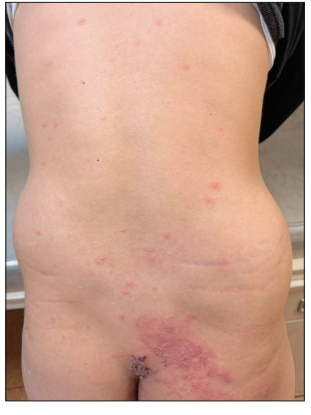
A sixteen-year-old male presented with complaints of painful rash on the body and fever. The patient had a history of hematopoietic stem cell transplantation three years ago with a diagnosis of alpha-mannosidosis. The patient was receiving steroid treatment due to gastrointestinal graft-versus-host disease. On physical examination of the patient, there were and papulovesicular rashes spreading to the right gluteal region, sacrum, penis, and right leg. These rashes complied with the S2-S4 dermatomal areas. Additionally, outside of these dermatomal areas, the patient also had non-grouping papulovesicular rashes on the nape, back, and anterior trunk.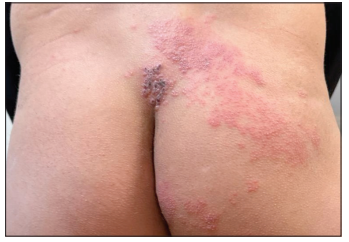
In laboratory findings, white blood cell count: 4.670/mm³, total neutrophil count: 1.850/mm³, total lymphocyte count: 2.350/mm³, hemoglobin: 13.5 g/dL, platelet count: 218.000/ mm³, and CRP: 22.1 mg/L were detected. Disseminated herpes zoster was diagnosed. Intravenous acyclovir treatment was initiated. During follow-up, the patient, whose rashes crusted and who had no new lesions, was discharged on the 6th day of intravenous acyclovir treatment, with the treatment to be completed to 10 days with oral valacyclovir. At the follow-up control, all of the patient’s rashes had resolved. Disseminated herpes zoster is a severe infectious disease that occurs with the reactivation of the varicella zoster virus, which causes chickenpox, in the body and, unlike classic shingles, is not limited to a dermatome but spreads throughout the body via the bloodstream. Disseminated herpes zoster usually develops in severely immunocompromised individuals, such as those receiving cancer treatment, HIV/ AIDS patients, organ transplant recipients, or those using high-dose immunosuppressive drugs. Clinically manifesting with widespread, chickenpox-like vesicles in different parts of the body, this picture may be accompanied by high fever, malaise, and severe neuropathic pain. Due to the systemic spread of the virus, vital organ involvements such as the lungs (pneumonia), liver (hepatitis), and central nervous system (encephalitis or meningitis) and related fatal complications may develop. It is of vital importance to hospitalize the patient urgently and initiate intravenous acyclovir treatment as soon as the diagnosis is made. In addition, since the infectivity is high until the lesions are completely crusted, patients must be isolated and kept away especially from individuals with weak immunity; for individuals in the risk group, zoster vaccines are the most effective method of protection.