
 TR
 EN

ABSTRACT
Objective
Immunization is a global success story that saves millions of lives every year. However, vaccine hesitancy and refusal have become increasing phenomena worldwide and in Turkey in recent years. This study aims to evaluate the attitudes, knowledge levels, and perceptions of vaccine safety among medical students, as well as the sociodemographic factors influencing these attitudes.
Materials and Methods
This descriptive and cross-sectional study was conducted in 2025 with 150 medical students from various universities in Turkey. Data were collected using a sociodemographic questionnaire and the vaccination attitudes scale. Statistical analyses included Student’s t-test, One-Way Analysis of Variance, Kruskal-Wallis, and correlation analysis.
Results
Of the participants, 68.0% were female and 32.0% were male, with a mean age of 21.45 ± 2.31 the mean total score of the vaccination attitudes scale was 52.42 ± 8.15 (min: 14, max: 70). students at the state university had significantly higher positive attitude scores than those at other universities (p= 0.001). A significant positive correlation was found between the mother’s education level (r= 0.482, p= 0.000), family economic status (r= 0.314, p= 0.012), and vaccine attitude scores. Senior (6th grade) students exhibited significantly more positive attitudes compared to first grade students (p< 0.05). Vaccine hesitancy was observed in 12.7% of the students.
Conclusion
Overall, medical students demonstrate a positive attitude toward vaccination. As students progress through their medical education, especially during clinical years, their knowledge-based thoughts and trust-based attitudes toward vaccines strengthen. However, the persistence of vaccine hesitancy among a portion of future physicians highlights the need for continued emphasis on vaccine safety and effective communication in medical curricula.
KEYWORDS
Vaccine, medical students, vaccine hesitancy, attitude, immunization
INTRODUCTION
Immunization is a global success story that saves millions of lives every year. Vaccines are the safest and most effective tools for protecting children against disease. Vaccines work with the body’s natural defense mechanisms to provide protection and reduce the risk of contracting the disease. According to the World Health Organization and United Nations International Children’s Emergency Fund reports, they protect 3.5-5 million children every year from deaths caused by diseases such as measles, diphtheria, tetanus, pertussis, influenza, and polio (1-3).
Vaccination protects not only individuals but also communities. In Türkiye, vaccine refusal increased 125-fold between 2012 and 2019. While vaccine refusal cases were first reported in our country in 2010, 183 families refused vaccination in 2011, and 23.000 families refused vaccination in 2018. According to the 2019 data of the Turkish Demoghraphic and Health Survey (TNSA), there has been approximately a 9% decrease in the rate of fully vaccinated infants and children compared to the previous year (3-5).
Vaccine hesitancy is a phenomenon that has been increasing globally, especially in recent years. Parents’ decision-making processes are influenced by information sources, risk perception, trust, and individual experiences. Social media and the internet are considered important factors that can negatively affect parents’ decision-making processes regarding vaccines (6).
In our study, we aimed to evaluate the attitudes, knowledge levels, and perceptions of vaccine safety of medical faculty students towards vaccines; and to determine the sociodemographic factors affecting these attitudes.
MATERIALS AND METHODS
Type of Study: This is a descriptive and cross-sectional research involving medical students from different state and private universities in Istanbul who came to a single training and research hospital for their Pediatric Health and Diseases internship. While the diverse university backgrounds increased sample diversity, the fact that data was collected in a single clinical setting is among the limitations of the study.
Research Location and Time: The research was conducted between October 1, 2025 and December 1, 2025 with medical students.
Research Sample: Face-to-face surveys were administered to students (state and private) studying and interning at the Pediatric Health and Diseases Clinic. A power analysis was performed, and 150 students were included in the study. The sample size was calculated using G*Power (version 3.1.9.7) software. Based on a moderate effect size (f= 0.25), a significance level (α) of 0.05, and a target power (1-β) of 0.80, the minimum required sample size was determined to be 128. Our final sample of 150 participants exceeds this requirement, ensuring sufficient statistical power to detect meaningful differences.
Ethics Committe Approval: Approval was obtained from the Prof. Dr. Cemil Taşcıoğlu City Hospital Non-Interventional Clinical Research Ethics Committee on December 1, 2025, with approval number 469.
Inclusion Criteria
• Being a medical student at the institutions where the research will be conducted or voluntarily participating in the research,
• Speaking Turkish (being able to communicate verbally and in writing),
• Being over 18 years of age.
Data Collection Tools
Data collection tools used in the research were a sociodemographic questionnaire and the attitudes towards vaccination scale. sociodemographic questionnaire:
Participants were asked about their age, sex, university and class level, parents’ education level, family’s economic level, and whether they received all vaccines in the current routine vaccination schedule and special vaccines. The family’s economic level was evaluated according to the minimum wage (22.104 TL). Income levels at or below the minimum wage (low), 2-3 times the minimum wage (medium), and 4 times and above the minimum wage (high) were considered.
Attitudes Towards Vaccination Scale
The 14-item attitudes towards vaccination scale, developed by Cvjetkovic et al. and validated and proven reliable in Turkish by Özümit et al. in 2021, was used (9,10). Questions 2-4,12-14 show thoughts about vaccination, and questions 1, 5-11 show attitudes towards vaccination.
Definition of Vaccine Hesitancy
In this study, vaccine hesitancy was calculated based on the proportion of students who expressed neutral or negative opinions in Likert-type responses to the relevant items on the ‘Attitudes Towards Vaccines Scale’ (e.g., ‘I am concerned about the side effects of vaccines’, ‘I am undecided about the necessity of vaccines’).
Statistical Analyses
In evaluating the findings obtained in the study, SPSS (Statistical Package for the Social Sciences) 27 and NCSS (Number Cruncher Statistical System) 2020 programs were used for statistical analyses. When evaluating the study data, quantitative variables were presented as mean, standard deviation, median, minimum and maximum values; and qualitative variables were presented as descriptive statistical methods such as frequency and percentage. Skewness-kurtosis values, histograms and Box-Plot graphs were used to evaluate the suitability of the data to normal distribution. Student’s t-test was used for evaluations of two groups showing normal distribution; OneWay ANOVA test was used for comparisons of three groups and above; and Tukey HSD or Bonferroni post-hoc tests were used to identify the group causing the difference. Normality of data distribution was assessed using the Shapiro-Wilk test. Independent Samples t-test was used to compare pairs showing a normal distribution, while Kruskal-Wallis and Mann-Whitney U tests were used for non-normally distributed or ordinal data. Relationships between the variables were examined using Pearson or Spearman correlation coefficients. Results were evaluated at a 95% confidence interval, and significance was at p< 0.05 (and p< 0.01 for higher significance).
RESULTS
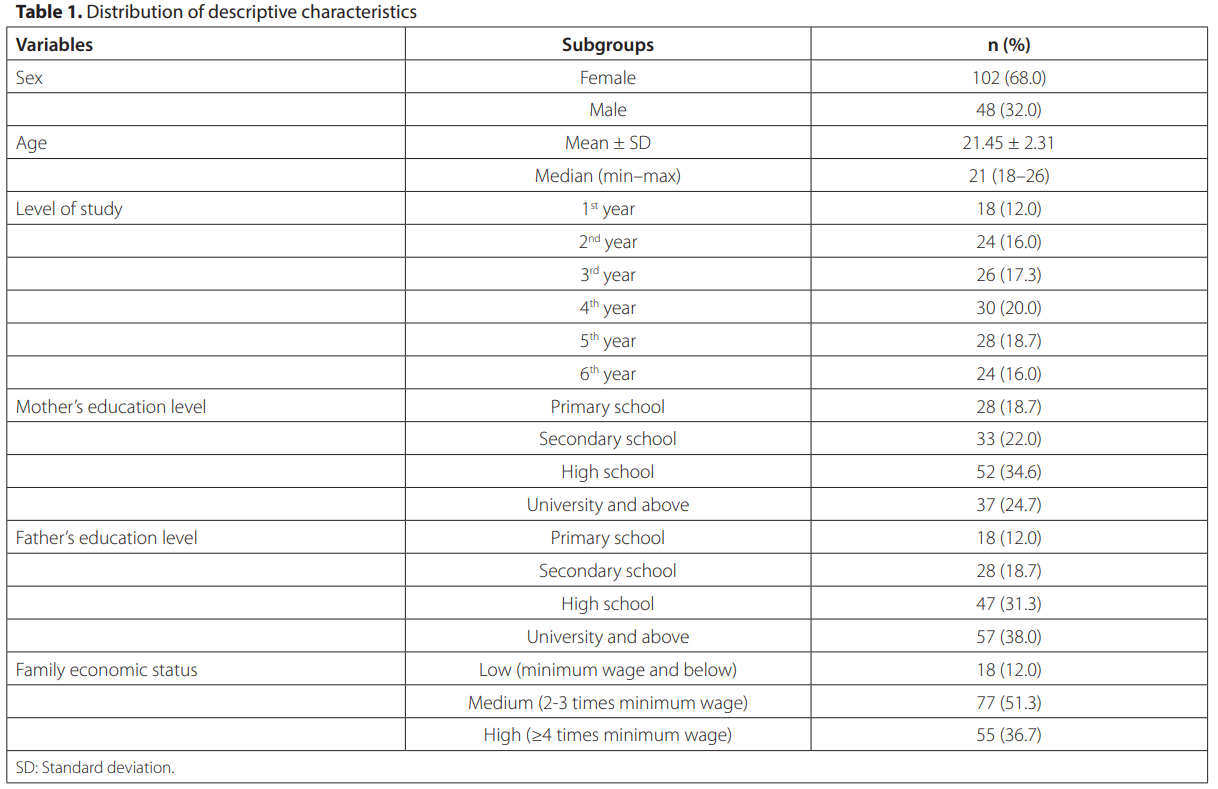
The study was conducted with a total of 150 participants, 68.0% (n= 102) of whom were female and 32.0% (n= 48) male, studying at various universities (state and private) in Türkiye (Istanbul) between 01/10/2025 and 01/12/2025. Descriptive characteristics of the participants are given in Table 1.When the economic status of the families was evaluated, it was seen that 12.0% (n= 18) had an income of minimum wage or less (low), 51.3% (n= 77) had an income of 2-3 times the minimum wage (medium), and 36.7% (n= 55) had an income of 4 times the minimum wage or more (high) (Table 1).
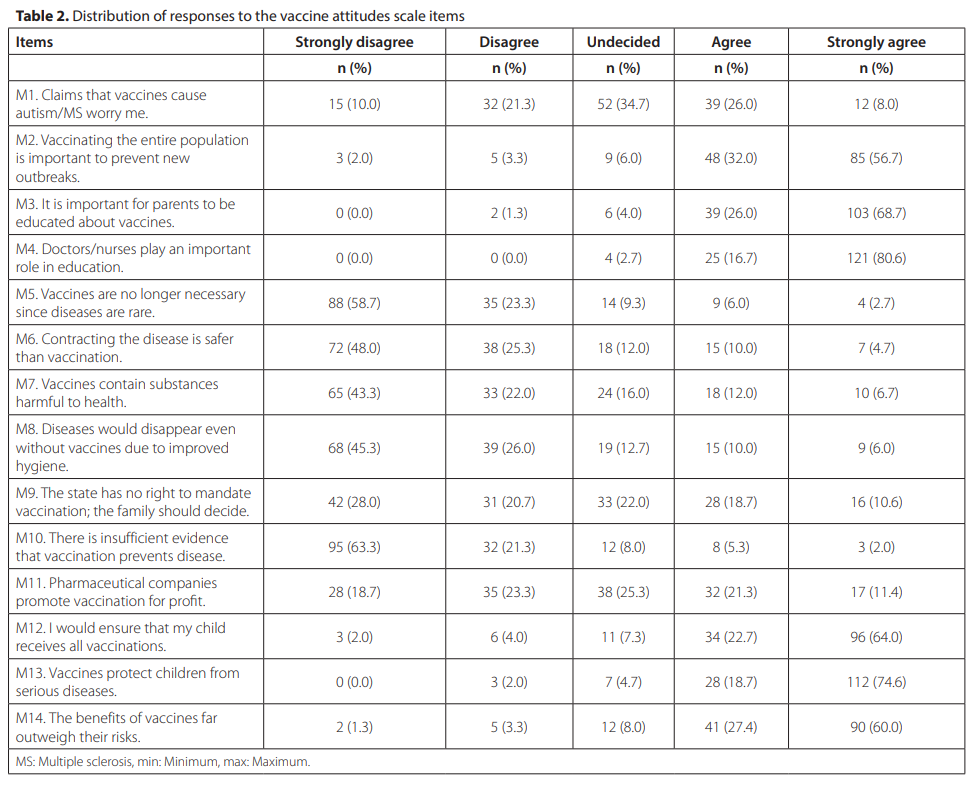
The answers given to the Attitudes Towards Vaccination Scale are given in Table 2. When the scores of the Attitudes Towards Vaccination Scale were examined, the total scores obtained from the scale ranged from 14 to 70, and the average was 52.42 ± 8.15 points. When the internal consistency of the scale was examined, The Cronbach’s Alpha coefficient for the total scale was calculated as α= 0.892. Accordingly, it can be said that the scale has a high degree of reliability for the research group (Table 3).
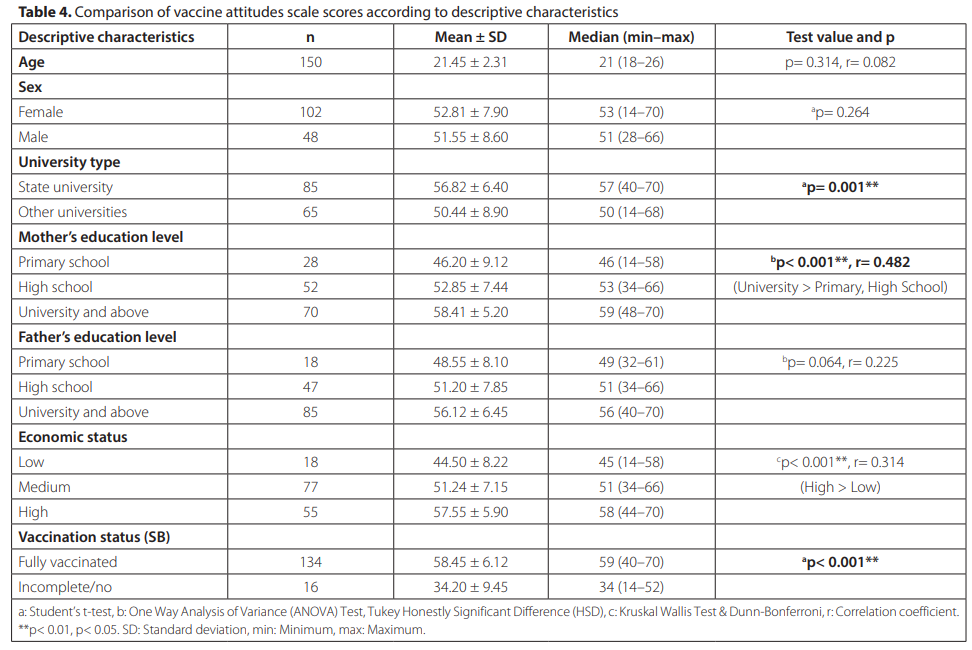
No statistically significant relationship was found between age and vaccination positive attitude scores (p> 0.05). However, a statistically significant, positive and strong relationship was found between the mother’s education level and vaccination positive attitude score (r= 0.482; p< 0.001). A statistically significant, positive relationship was also found between the family’s economic status and vaccination positive attitude score (r= 0.314; p= 0.012; p< 0.05) (Table 4).
According to university type, vaccination positive attitude scores of state university students (56.82 ± 6.40) were found to be statistically significantly higher than those of students in other universities (50.44 ± 8.90) (p= 0.001; p< 0.01).

However, there was no statistically significant difference in vaccination positive attitude scores according to sex (p> 0.05) (Table 4). When the scores obtained by the participants from the sub-dimensions of the “Attitudes Towards Vaccination Scale” (‘Thoughts towards vaccines’, ‘Attitudes towards vaccines’) and their relationships with descriptive characteristics were examined, the following results were obtained:
The average score obtained by the participants from this sub-dimension was determined as 27.55 ± 2.60. The sub-scores of state university students regarding thoughts towards vaccines (28.65 ± 1.40) were found to be statistically significantly higher than those of other university students (26.12 ± 3.50) (p= 0.001; p< 0.01). It was observed that those whose mothers had a university education or higher (29.20 ± 0.80) and those with high income (28.95 ± 1.05) had significantly higher rates of developing positive thoughts towards vaccines (p< 0.001). A positive and moderate correlation was found between maternal education and positive attitude scores (r= 0.512; p< 0.01) (Table 5).
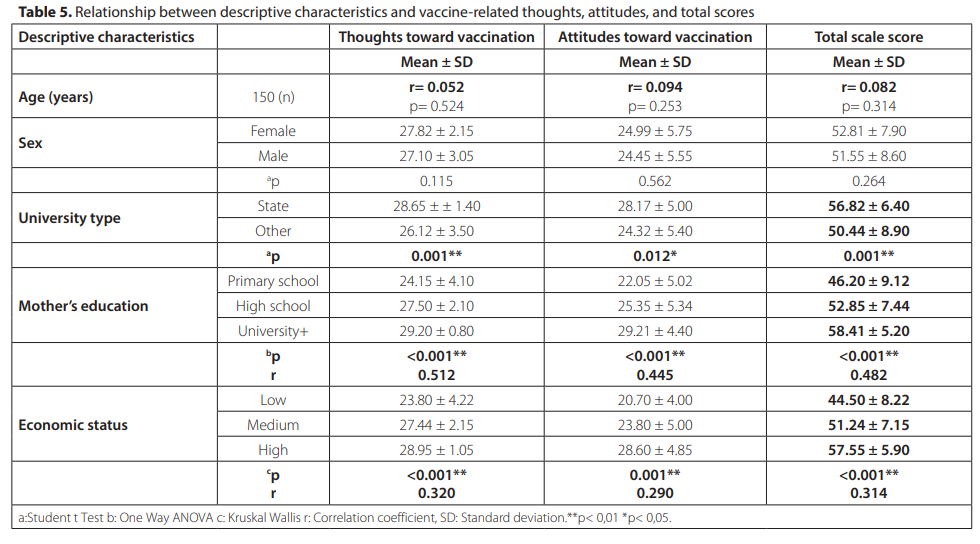
The mean score in this sub-dimension was calculated as 24.87 ± 5.65. The higher standard deviation compared to the attitude dimension indicates that participants exhibited a more heterogeneous distribution in their attitudes towards vaccines (trust, concern about side effects, etc.). Positive attitude scores of those who received state university (28.17 ± 5.00) were significantly more positive than those who did not (24.32 ± 5.40) (p= 0.012; p< 0.05). A significant positive relationship was found between income level and positive attitude scores (r=0.290; p< 0.05). In contrast, age (r=0.094) and sex (p= 0.562) variables did not have a statistically significant effect on attitudes towards vaccines (Table 5).
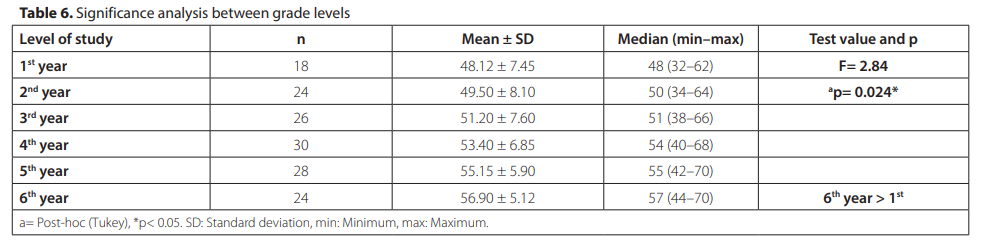
When the differences between the years were examined, a statistically significant difference was found (p= 0.024; p< 0.05). However, this difference was not between all the years, but specifically between the initial and final stages of education. A significant difference was found between the class levels of the participants and their total scale scores (p< 0.05), and it was determined that the attitudes of final-year students towards vaccination were more positive than those of the initial classes (Table 6).
DISCUSSION
In our study, a statistically significant relationship was found between the mother’s education level, family’s economic level, and the vaccine attitudes scale. Participants’ “Opinion” scores regarding the necessity and scientific basis of vaccines were found to be higher and more stable than their overall “Attitude” scores towards vaccines. This situation reveals that even if individuals theoretically find vaccines correct, they are influenced by their economic and educational backgrounds, especially mother’s education, in the application and trust (attitude) phases.
According to the analysis results, it is observed that positive attitude scores towards vaccines increase as students move to higher years (especially the 5th and 6th years). According to the statistical analyses, the vaccine positive attitude scores of 6th year students are statistically significantly higher than those of 1st year students (p< 0.05). This situation may be due to the fact that students, especially those in the state university, understand the importance of vaccines better in the upper years through clinical courses and practical applications (internships, etc.). It was found that as the class level increased, “Thoughts on Vaccination” (knowledge-based) scores increased rapidly, while “Attitudes Towards Vaccination” (trustbased) scores showed a slower but more stable increase.
This study includes students from different universities (state and private) in Istanbul who completed their Pediatric Health and Diseases internships at the same center. While the diverse backgrounds of the participants ensured diversity, the fact that the data were collected in a single clinical setting limited the generalization of the results to all medical students in Türkiye (limitation of external validity). Furthermore, since our study is a cross-sectional study, the significant relationships found between the mother’s education level and socioeconomic status and positive vaccination attitudes should be interpreted as strong correlations, not cause-and-effect relationships.
Examining the correlation coefficients found in our study, the moderately positive relationship (r= 0.482; p< 0.001) found between the mother’s education level and positive vaccination attitudes is of critical clinical importance. This finding demonstrates that in vaccination counseling processes, not only the patient’s background but also family dynamics and educational background should be proactively evaluated by the physician. From an educational perspective, this ‘moderate-strong’ correlation proves that medical students’ understanding of the impact of socio-cultural markers on health literacy is as essential as technical knowledge for implementing an effective vaccination strategy.
The strength of the correlation coefficient can be used as a ‘risk indicator’ to determine the time a physician should allocate in outpatient settings and the arguments they should use. For example, the fact that the likelihood of vaccine refusal increases in families with low educational levels in parallel with this correlation strength makes it a clinical necessity for the physician to use a more intensive and specially structured communication language in this group. The correlation between students’ educational level and attitude is educational evidence showing that the curriculum should not be limited to the first year but should also be reinforced in clinical years. Indeed, the strengthening of the correlation in clinical years (6th year) confirms the transformative power of education in creating attitude change.
In our study, it was found that as the mother’s educational level increased, the positive vaccination attitudes of medical students increased. However, due to the cross-sectional design of our study, this should not be interpreted as maternal education directly altering positive vaccination attitudes (causality). Instead, it should be considered that growing up in a highly educated family environment is a supportive relational factor in the formation of the student’s attitude through access to health literacy and scientific information.
With the coronavirus diseases-2019 (COVID-19) pandemic, an increase in vaccine hesitancy has been observed. A study conducted in our country during the COVID-19 period showed that 45.3% of the participants were hesitant to get the COVID-19 vaccine declared appropriate by the Ministry of Health, 51.6% believed that the vaccine would be effective in preventing and controlling the disease, and 89.6% of the participants were hesitant to vaccinate their children (7).
According to a study conducted by Ekşioğlu et al. with primary healthcare workers, 5.0% of healthcare workers support vaccine refusal, and 15.4% experience vaccine hesitancy. The most frequently reported concern about getting vaccinated is that the vaccine components are not considered safe (8).
In a study by Ergin et al. with medical students, the general knowledge level of medical students regarding vaccines was found to be low, but their attitudes towards vaccines were positive (11). Sixth-year students’ knowledge and positive attitude scores were found to be statistically significantly higher, similar to our study.
In the study by Özdemir et al., human papilloma virus (HPV) Knowledge Scale and subscale scores were found to be significantly lower in the 1st and 2nd years compared to others (12). It was noted that the average knowledge score increased as the class level increased. Similarly, in our study, the vaccine attitude scale was found to be lower in the 1st and 2nd years. Positive attitude scores were found to be higher as the class level increased. Furthermore, the rate of those who received specific vaccines (HPV, Meningococcal) was found to be 28.7%, and this group’s vaccine positive attitude scores were statistically significantly higher than the other group.
According to Yekdeş et al., the majority of final-year medical students exhibited a positive attitude towards vaccines. Similarly, in our study, students’ attitudes towards vaccines were generally found to be positive.
A study conducted with medical students in Germany, Austria, and Switzerland found that overall vaccine attitudes were significantly correlated, but no significant correlation was found between knowledge, attitudes, and the duration of medical education (13,14). In our study, however, vaccine positive attitude scores showed a significant correlation with the duration of medical education.
A study conducted in Kuwait indicated that despite high vaccination rates among healthcare workers, vaccine hesitancy was observed due to safety concerns, while healthcare workers showed moderate knowledge and attitudes towards vaccines. Older age, male sex, being a medical student, and being in later years of study were associated with higher knowledge levels and attitudes (15). In contrast, our study found no significant relationship between age and sex and vaccine attitudes, but a significant relationship was found with later years of study.
A study conducted with medical students in Saudi Arabia found that although there was no sex difference in scores in the knowledge and attitude domains, the average knowledge score and positive attitude score were significantly correlated with the year of study. A significant relationship was found between vaccination knowledge and attitudes (16). Similarly, our study also showed that vaccine attitudes were related to the year of study.
Çakır and colleagues observed that 7.6% of medical faculty students had general vaccine hesitancy (17). In our study, we also found that 12.7% (n= 19) of the students had vaccine hesitancy. A very strong negative correlation was found between the “Attitudes Towards Vaccination” sub-dimension and vaccine hesitancy. In other words, as the positive attitude score decreases, the rate of hesitancy directly increases.
In Spain, 74.70% of medical students stated that the most important factor influencing their opinions about vaccines was scientific evidence. As for practices, 76.10% stated that influenza and Hepatitis B vaccines should be mandatory for healthcare personnel (18). Medical students in Spain exhibited a positive attitude towards vaccines. Older students, those working in paid jobs, and those doing non-health-related work exhibited less positive attitudes. Only a small percentage of students identified themselves as anti-vaccination (19). These findings reveal that vaccine attitudes are shaped not only by medical knowledge but also by the individual’s social and living conditions. The significant relationship found between mother’s education level and family’s economic status and vaccine positive attitude scores in our study parallels these results.
In a study conducted with medical students and resident physicians in China, almost all participants (89%) stated that they supported the current vaccination schedule. Only 48.3% received a booster dose of vaccine/special vaccine. No significant difference was found in terms of knowledge and general attitude between medical students and resident physicians (20). However, the fact that behaviors reflected in practice (such as receiving a booster vaccine) remained lower, independent of knowledge and attitude, shows that theoretical knowledge alone is not sufficient for behavioral change. The significantly higher vaccine positive attitude scores of students who received special vaccines in our study are consistent with these findings.
In a study conducted with medical students in Egypt, 43% of the participants were found to have a moderate level of knowledge about vaccines. While 36.7% of the participants had received at least one booster dose of the vaccines recommended by healthcare professionals in the last 10 years, only 6.1% had received all recommended vaccines. The Hepatitis B vaccine was the most commonly known (71%) and most frequently received (66.7%) vaccine. The majority (>90%) stated that they agreed that vaccination is beneficial and safe(21). In our study, the sub-dimension scores of “Thoughts Towards Vaccination” were also the fact that the score is higher compared to the “Attitudes Towards Vaccination” sub-dimension suggests that although students scientifically believe in vaccination, factors such as trust, concerns about side effects, and personal risk perception may limit its application.
Study Limitations
The study was limited to 150 medical students, and the findings may not be generalizable to all medical students in Türkiye. The fact that data was collected through a self-reported questionnaire may lead to overly positive responses (bias) due to “social approval levels.” The cross-sectional nature of the study prevents monitoring changes in attitudes over time. The fact that the majority of participants were from a specific university may have limited the representativeness of the study in inter-university comparisons.
CONCLUSION
This study showed that medical students generally have positive attitudes towards vaccines, but socioeconomic factors and education level play a decisive role in influencing these attitudes. In conclusion, it is recommended that vaccine safety and the importance of immunization be given more prominence in the curriculum from the early years of medical education so that future physicians can effectively communicate with individuals who are hesitant about vaccines and protect public health. Standard patient interviews or simulation trainings should be added to the curriculum to enable students to communicate professionally and empathetically with parents who are hesitant about vaccinations. Specific counseling modules should be created that can respond to public concerns not only regarding clinical information but also on topics such as vaccine ingredients and side effect management. Students should be given the opportunity to experience vaccination processes firsthand by actively observing in community health centers and child clinics.