 TR
 EN


ABSTRACT
Objective
This study aims to examine the experiences of parents, nurses, and child development specialists during the childhood vaccination process, with a focus on information sources, attitudes, and support mechanisms.
Materials and Methods
This qualitative study was conducted using an online data collection method. Data were obtained through openended written forms and analyzed using content analysis.
Results
The findings indicate that parents’ primary concerns regarding vaccination center on alleged associations with autism, vaccine components, and potential long-term effects. Physicians and family doctors were identified as the main sources of vaccine-related information, while social media and mass media also played a significant role in shaping parental perceptions. Although the information and support provided by nurses were generally perceived as sufficient, some parents reported receiving incomplete or unsatisfactory responses. Child development specialists were found to play a supportive role in conveying scientific information and addressing parental concerns related to child development.
Conclusion
The study demonstrates that childhood vaccination is not solely a medical practice but a process shaped by trust, communication, and multi-stakeholder support mechanisms.
KEYWORDS
Vaccination, parental attitudes, nurses, child development specialists, content analysis
INTRODUCTION
Childhood vaccination is recognised as one of the most successful and cost-effective public health interventions in modern medicine for reducing preventable diseases, disabilities, and deaths worldwide. According to data from the World Health Organization, vaccines save the lives of millions of children every year and protect not only individuals but also society as a whole by establishing community immunity (1). However, the sustainability of this success depends on effective communication and trust-based interactions among parents, healthcare professionals, and supporting disciplines involved in the vaccination process. In this context, the levels of knowledge, attitudes, and available support mechanisms of the different stakeholders emerge as key factors that directly influence vaccination rates and confidence in vaccines (2).
Studies examining parents’ attitudes towards and experiences of the vaccination process demonstrate that the information and communication provided by healthcare professionals play a decisive role in parental confidence in vaccines (3). Healthcare professionals are reported to be the actors whom parents trust most when making vaccination decisions for their children, and this trust is shaped not only by the content of the information provided but also by how and by whom that information is communicated (4). In contrast, the increasing prevalence of vaccine hesitancy among parents in recent years has adversely affected vaccination rates and further increased the responsibilities of healthcare professionals in this process (5).
Nurses occupy a critical position as the healthcare professionals who interact most frequently and directly with parents during the vaccination process. Nurses are not merely technical personnel who administer vaccines; they are also primary sources of information who answer parents’ questions, address their concerns, and build trust (6). Nevertheless, increasing workloads, time constraints, and communication difficulties may impede nurses’ ability to fulfil these roles effectively.
Child development specialists constitute another important stakeholder group that complements the psychosocial dimension of the vaccination process. By providing parents and children with guidance appropriate to their developmental needs, child development specialists contribute to making vaccination a safer and more supportive experience for the child (4). However, studies examining the roles of child development specialists in providing information and support during the vaccination process remain limited in the literature (3). This suggests that the potential contributions of child development specialists to the vaccination process have not been made sufficiently visible.
Over the past decade, fluctuations in vaccination rates despite increased scientific evidence and improved access to vaccines have placed the concept of “vaccine hesitancy” at the centre of the literature. Vaccine hesitancy is defined as a multidimensional and context-dependent phenomenon involving indecision, delay, or refusal despite the availability of vaccines (5). Underlying this hesitancy are the proliferation of information pollution and disinformation in the media and social media, together with declining trust in expert knowledge. Parents are exposed to an intensive flow of information when making decisions concerning their children’s health, which often creates an environment of anxiety arising from information pollution rather than from a lack of information (2).
At this point, the quality of health communication plays a decisive role. Health communication is defined as the planned use of communication strategies to influence individuals’ health-related attitudes and behaviours. The literature indicates that direct communication with healthcare professionals remains the most influential factor in shaping parents’ attitudes towards vaccines (3). It is emphasised that, when making vaccination decisions, parents value not only the content of the information provided but also its communication in a manner that conveys trust and support (4). Healthcare professionals therefore play a key role in overcoming vaccine hesitancy, not only as providers of information but also as communicative actors who build trust and combat disinformation.
Within this framework, the vaccination process should be regarded as a multi-stakeholder field of interaction in which parents’ emotional and cognitive experiences intersect with the professional functioning of the healthcare system. While parents, as the primary decision-makers in the process, attempt to balance individual concerns with societal expectations, nurses and child development specialists emerge as the principal actors shaping the dimensions of trust, communication, and support. However, studies addressing the experiences of these stakeholders from a holistic perspective remain limited in the existing literature.
The aim of this study is to examine the childhood vaccination process from the perspectives of parents, nurses, and child development specialists using a holistic approach. By revealing the experiences of these three stakeholder groups regarding information exchange, attitudes, and support mechanisms within the vaccination process, the study seeks to demonstrate that vaccination is not merely a clinical practice but a multidimensional field of experience based on interaction among stakeholders.
MATERIALS AND METHODS
Research Approach and Design
This study was conducted using a qualitative research approach to examine the experiences of parents, nurses, and child development specialists regarding knowledge, attitudes, and support mechanisms within the childhood vaccination process. The study was designed as qualitative descriptive research, aiming to describe participants’ perceptions and experiences of the vaccination process in their own words (7).
Data were collected through participants’ written responses to open-ended questions. Therefore, the data do not constitute in-depth interview data; instead, participants’ experiences were analysed descriptively and thematically on the basis of their natural expressions. The data obtained were evaluated using content analysis.
Participants and Sampling
The study sample was determined using criterion sampling, one of the purposive sampling methods (8). This method was based on selecting participants who met predefined criteria appropriate to the purpose of the study.
Accordingly, the eligibility criteria established for the participants were as follows:
• Parents: Having at least one child and having actively followed the childhood vaccination schedule.
• Nurses: Having actively worked in child health and vaccination units for at least one year.
• Child development specialists: Being involved in parental counselling and child monitoring processes in their professional practice.
Participants were recruited through social media and professional communication networks. Initially, the aim was to recruit 30 participants from each stakeholder group; however, at the end of the data collection process, data saturation was considered to have been reached in accordance with the study objectives with a total of 33 participants, comprising 11 parents, 11 nurses, and 11 child development specialists.
The research data were collected between September and December 2025.
Data Collection Instruments and Procedure
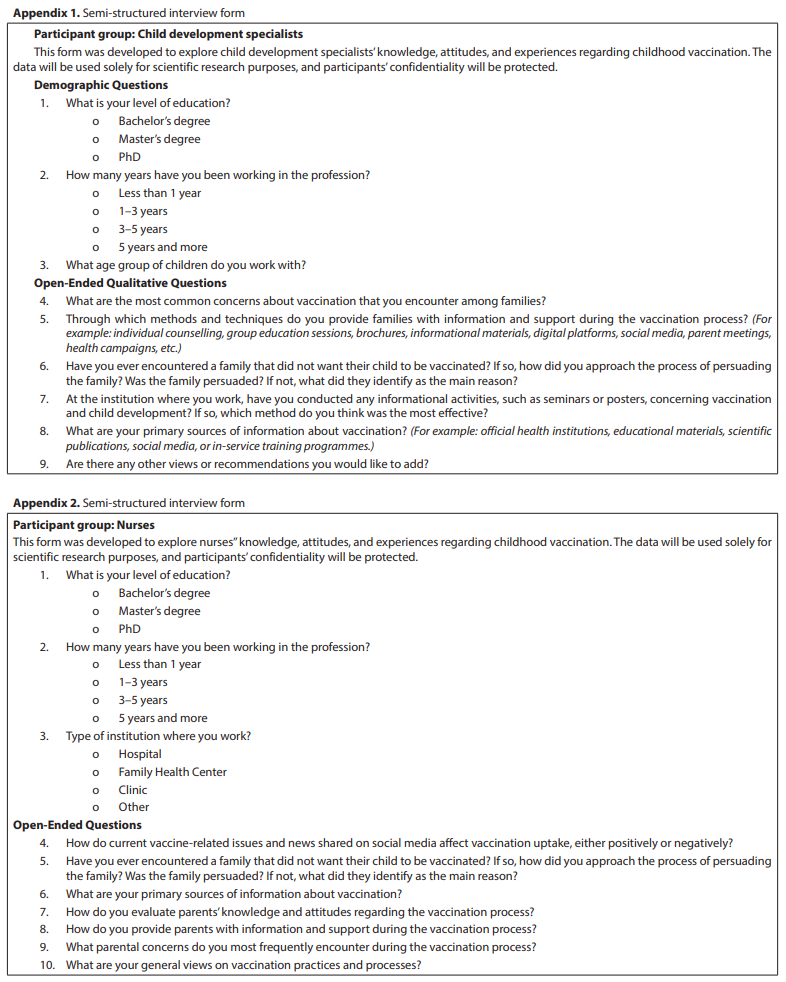
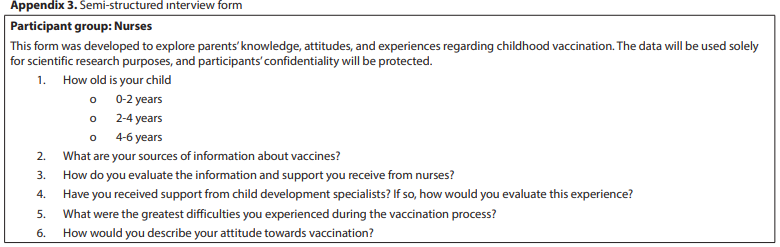
The data were collected through online written forms consisting of open-ended questions developed by the researchers. Content and construct validity were established by obtaining the opinions of two experts from the fields of child development and nursing. The questions included in the data collection instruments are presented as Appendix 1 at the end of the study. The data collection process was conducted through the Google Forms platform. This method was selected because the participants were located in different geographical regions of Türkiye, healthcare professionals had heavy workloads and limited time, digital data collection practices had become widespread in the post-pandemic period, and online written responses provided participants with a sense of anonymity. This method enabled participants to provide more thoughtful and candid responses, particularly regarding a sensitive subject such as vaccine hesitancy.
Limitations of the Data Collection Method
Collecting the data in written form through an online platform did not allow real-time interaction between the researcher and the participant or the use of probing to elicit more detailed responses. Furthermore, non-verbal communication cues, such as tone of voice, gestures, and facial expressions, which can be observed during face-to-face interviews, could not be evaluated using this method. In this respect, the data obtained do not constitute in-depth interview data.
In view of these limitations, rather than producing generalisable findings, the study aimed to present parents’, nurses’, and child development specialists’ perceptions and experiences of the childhood vaccination process through a descriptive and exploratory approach.
Data Analysis and Trustworthiness
Miles and Huberman’s content analysis approach was adopted for data analysis (9). The analysis process comprised the following stages:
Data Preparation: Transcription and systematic reading of the written texts.
1. Coding: Dividing the data into meaningful units and assigning conceptual labels through open coding.
2. Theme Development: Grouping related codes to develop overarching themes and subthemes.
3. Intercoder Agreement: To ensure the objectivity and traceability of the analysis, 30% of the data were coded by a second expert independent of the field. Miles and Huberman’s reliability formula was used to calculate agreement between the two coders (9):

To enhance the reliability of the analysis process, 30% of the data were coded by a second researcher independent of the field. Intercoder agreement was calculated using Miles and Huberman’s reliability formula and was found to be 87%. This rate exceeds the acceptable threshold of 80% for qualitative research, demonstrating the reliability of the analysis process.
Ethical Principles
This study was conducted in accordance with the principles of scientific research and publication ethics. Before the implementation of the study, ethics approval was obtained from the Istanbul Medipol University Non-Interventional Clinical Research Ethics Committee on 4 February 2025 (Approval No. E-10840098-202.3.02-1014). The following procedures were implemented during the data collection process to protect participants’ rights:
• Informed Consent: Participants were provided with information regarding the purpose and scope of the study and how the data would be used. Their voluntary informed consent was obtained electronically through the data collection form.
• Confidentiality and Anonymity: The collection of any data that could disclose participants’ identities was avoided. During the reporting stage, the codes E1, E2... for parents, H1, H2... for nurses, and ÇG1, ÇG2... for child development specialists were used instead of real names, thereby ensuring the highest possible level of data confidentiality.
RESULTS
This section presents the findings concerning the experiences of parents, nurses, and child development specialists regarding the childhood vaccination process. The findings were structured around the stakeholders’ sources of information, the difficulties they encountered during the vaccination process, and their experiences with support mechanisms.
Demographic Characteristics of the Participants
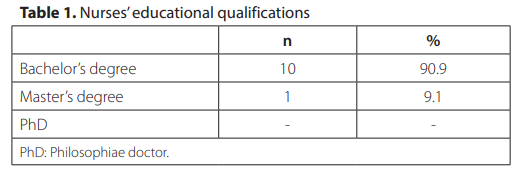
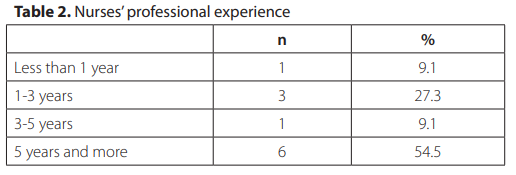
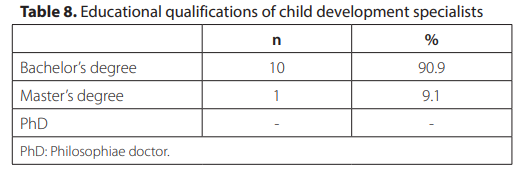
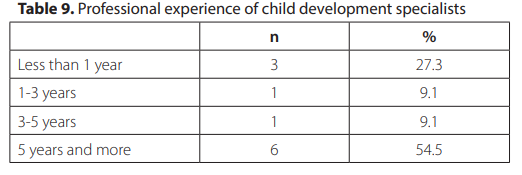
The majority of the nurses participating in the study held bachelor’s degrees (n= 10), and more than half had five or more years of professional experience (n= 6). Similarly, the majority of the child development specialists held bachelor’s degrees, and more than half had five or more years of professional experience.
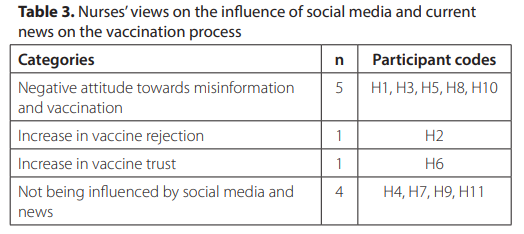
As shown in Table 3, some nurses stated that misinformation circulating on digital platforms negatively affected parents’ attitudes towards vaccination. Other nurses reported that social media and current news were not decisive factors in parental decision-making. A limited number of participants indicated that these platforms could directly increase vaccine refusal, while a similarly limited number stated that social media could help build confidence when accurate content was provided.
Nurse H3 explained this situation as follows: “Social media is filled with a new rumour every day. It destroys confidence in vaccines. News stories claiming that vaccines ‘cause autism’ are particularly frightening for families.” (H3, Nurse)
Some participants emphasised that the influence of social media remained secondary and that parents primarily relied on direct communication with healthcare professionals when making decisions. The statement of Nurse H7 supports this view: “Some families are influenced by social media, while others pay no attention to it at all. Families in rural areas, in particular, still consult healthcare professionals directly.” (H7, Nurse)
Views regarding the potential use of social media as an awareness-raising tool were limited. Nurse H6 described this potential as follows: “When it comes from a reliable source, social media can actually encourage families to question information and become better informed, but unfortunately, such content is very limited.” (H6, Nurse)
Interaction and Persuasion Experiences with Families Experiencing Vaccine Refusal or Hesitancy
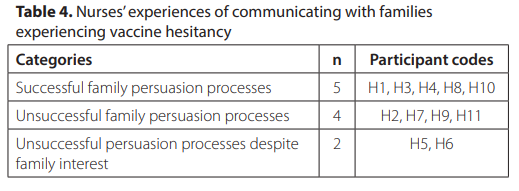
The nurses’ experiences of communicating with families experiencing vaccine hesitancy are presented in Table 4.
An examination of the nurses’ communication with families experiencing vaccine hesitancy showed that some nurses reported successfully persuading families through the provision of information and effective communication. In contrast, other nurses stated that families continued to resist vaccination despite their communication efforts. A limited number of nurses reported that although families were receptive to information, they still experienced indecision.
Nurse H3 explained that families’ prejudices could be overcome through appropriate communication: “Families are mostly anxious and sceptical because of misinformation on
social media. Some of them are persuaded when we provide accurate information, but the process sometimes requires a great deal of patience.” (H3, Nurse)
In contrast, some nurses stated that attempts to persuade families with deeply rooted misconceptions could remain unsuccessful. Nurse H7 summarised this situation as follows: “Some families are so resistant that they refuse to abandon misconceptions such as the belief that vaccines cause autism. Even when we present scientific evidence, they place greater trust in their own sources.” (H7, Nurse)
Some participants also stated that although families were receptive to information, they could still experience indecision during the decision-making process. Nurse H5 described this situation as follows: “We provide information and they listen, but parents are very confused. Misinformation is constantly circulating on social media, and this prolongs the period of indecision.” (H5, Nurse)
Parents’ Knowledge Levels and Attitudes from the Nurses’ Perspective
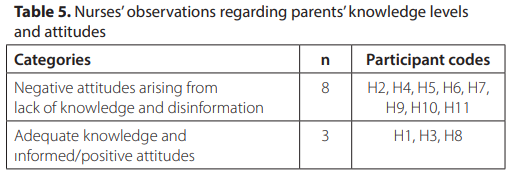
The nurses’ observations regarding parents’ levels of knowledge about and attitudes towards vaccination are presented in Table 3.
The vast majority of nurses stated that parents had insufficient knowledge and that this situation was largely driven by inaccurate or scientifically unfounded sources of information. In contrast, some nurses reported that parents possessed adequate knowledge and displayed positive attitudes towards vaccination.
Nurse H6 emphasised the importance of the information source as follows: “The number of families refusing vaccination because of insufficient knowledge is increasing; misinformation obtained from non-scientific sources, in particular, completely disrupts the decision-making process.” (H6, Nurse)
Parents’ Concerns About Vaccination from the Stakeholders’ Perspectives (Nurses and Child Development Specialists)
The parental concerns reported by nurses and child development specialists are presented holistically in Table 6.
Table 6 presents the primary concerns expressed by parents regarding the vaccination process. According to the accounts of both stakeholder groups, parents frequently associated vaccines with autism and similar neurodevelopmental
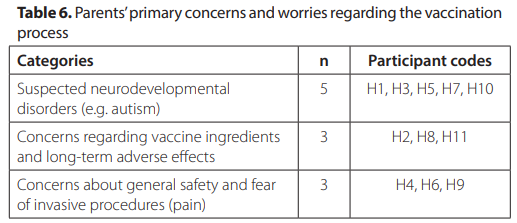
disorders. Concerns regarding vaccine ingredients and longterm adverse effects, perceptions of general safety, and fears related to the invasive nature of the procedure were also among the other areas of concern reported.
Professional Evaluations of the Vaccination Process (Nurses)
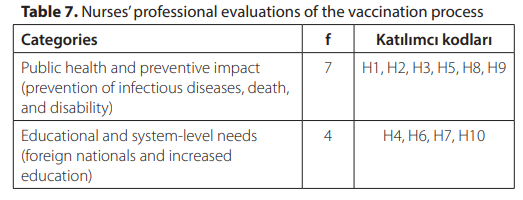
The nurses’ professional evaluations of the vaccination process are presented in Table 7.
According to Table 7, most nurses emphasised the protective role of vaccination practices in public health. In contrast, some nurses stated that educational and systemic arrangements were particularly needed within the vaccination process.
Demographic Characteristics of Child Development Specialists
The vast majority of the child development specialists participating in the study held bachelor’s degrees (n=10), and more than half had five or more years of professional experience (n= 6).
Difficulties Encountered in Communicating with Families Experiencing Vaccine Hesitancy (Child Development Specialists)
The sources of resistance encountered by child development specialists in their interactions with families experiencing vaccine hesitancy are presented in Table 10.
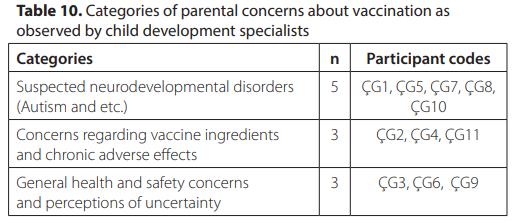
According to the accounts of the child development specialists, one of the concerns most frequently expressed by parents regarding vaccination was the belief that vaccines could cause autism and similar neurodevelopmental disorders. Participants stated that this concern was often fuelled by misinformation obtained from external sources.
Child development specialist ÇG1 described this situation as follows: “During sessions, families frequently ask, ‘Does vaccination cause autism?’ It is very difficult to alleviate this concern because misinformation has become combined with an emotional fear.” (ÇG1, Child Development Specialist)
In addition, some child development specialists reported that parents had concerns regarding vaccine ingredients and potential long-term effects. Participants stated that families particularly sought greater reassurance about the possible effects on their child’s future health. Participant ÇG4 described this situation as follows: “Some families are seriously concerned about the substances contained in vaccines; rather than short-term adverse effects, they want greater clarity regarding the effects on their child’s future health.” (ÇG4, Child Development Specialist)
Some participants also stated that parents could perceive vaccination as a general health risk and could therefore adopt a hesitant attitude because of perceived uncertainty. Child development specialist ÇG3 described this approach as follows:
“Families who are concerned about protecting their overall health remain hesitant because they believe that they do not have sufficient and transparent information about the potential adverse effects of vaccines.” (ÇG3, Child Development Specialist)
Persuasion Processes of Child Development Specialists and Sources of Resistance Encountered
The interactions of child development specialists with families experiencing vaccine hesitancy and the reasons for their inability to change families’ decisions—namely, unsuccessful persuasion—are classified in Table 11.
As shown in Table 11, child development specialists reported encountering various sources of resistance during persuasion processes. Some participants stated that anti-vaccination discourse encountered by families through other healthcare professionals or individuals whom they regarded as authorities made the persuasion process more difficult.
It was also reported that disinformation circulated through the media and social platforms could influence families’ decision-making processes. A limited number of participants stated that sociocultural and belief-based reasons could be decisive in vaccination decisions.
Parents’ Sources of Information and Perceptions of Professional Support
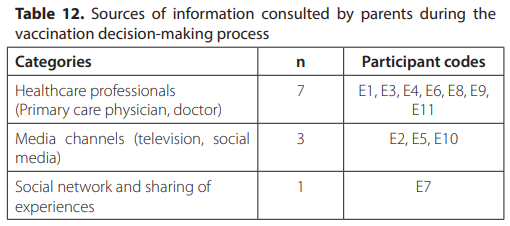
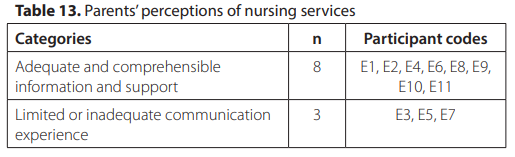
The sources of information consulted by parents when making vaccination decisions are presented in Tables 12, 13, and 14.
As shown in Table 12, parents consulted different sources of information during the vaccination decision-making process. Some participants identified healthcare professionals, such as family physicians and doctors, as their primary sources of information. Some parents stated that they used media channels such as television and social media. One participant reported benefiting from the experiences of other parents.
According to Table 13, some parents considered the information and support they received from nurses to be adequate and comprehensible. These parents described the communication process as a positive experience. However, some participants stated that they had not received complete answers to their questions or that communication had remained limited.

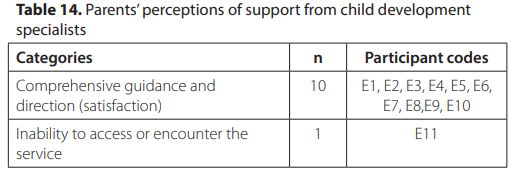
As shown in Table 14, the majority of parents reported that they were satisfied with the support they received from child development specialists. Participants stated that child development specialists provided clear answers to their questions and offered appropriate guidance. One participant, however, reported having had no contact with a child development specialist.
Difficulties Experienced by Parents and Their Attitudes During the Vaccination Process
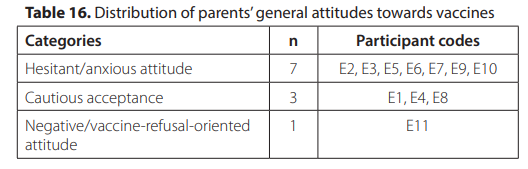
The principal difficulties encountered by parents during the vaccination process are presented in Tables 15 and 16.
As shown in Table 15, parents experienced different difficulties during the vaccination process. Some participants stated that they were influenced by negative statements made by people in their social environment and older family members.
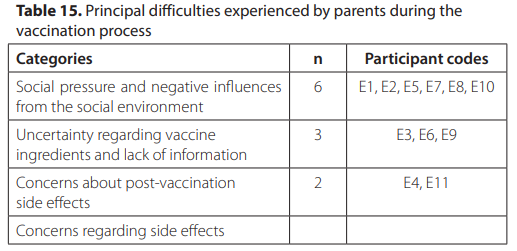
Some parents reported that they did not have sufficient information about vaccine ingredients and experienced uncertainty. Another group stated that the adverse effects occurring after vaccination caused them anxiety.
As shown in Table 16, parents held different attitudes towards vaccines. Some participants reported adopting a hesitant and anxious approach to vaccination. Although this group did not completely refuse vaccination, they expressed concerns regarding safety. Some parents stated that they continued with vaccination despite their concerns.
One participant reported having a more distant attitude towards vaccination and a tendency to refuse it. Parent E11 described this approach as follows: “I believe that vaccines are unnecessary and that they disrupt children’s natural immunity. For this reason, I remain very distant from the process.” (E11, Parent)
Some parents also stated that their communication with healthcare professionals influenced their decision-making processes. Parent E4 described this experience as follows: “The nurse explained everything so clearly and patiently that, despite my fears, I was able to take my child for vaccination with confidence.” (E4, Parent)
DISCUSSION
In this study, the childhood vaccination process was examined holistically from the perspectives of parents, nurses, and child development specialists. The findings suggest that vaccination is not merely a biomedical intervention but a multidimensional experience shaped by digital information flows, sociocultural interactions, and forms of communication established with healthcare professionals.
Many parents reported that negative statements from older family members and their social circles complicated their decision-making processes regarding vaccination. This finding indicates that vaccination decisions are constructed not only individually but also within a broader social context. In collectivist cultures such as Türkiye, individual health decisions are known to be shaped through interactions with family members and close social networks. As emphasised by Göral (10), attitudes towards vaccination cannot be considered independently of their social context. The findings of the present study similarly suggest that everyday social interactions may, in some cases, outweigh professional health information.
The fact that a considerable proportion of parents described themselves as hesitant despite having their children vaccinated is consistent with the concept of “vaccine hesitancy” described in the literature. This finding demonstrates that vaccine hesitancy is not limited to vaccine refusal; even when vaccination is undertaken, the process may still be experienced with anxiety and uncertainty. Participants’ accounts revealed that scientifically unfounded associations between vaccines and autism were particularly prominent. As Liu et al. (11) noted, such misconceptions may disrupt the balance between the risks perceived by parents and the protective benefits provided by vaccination. In this context, parents may perceive rare adverse effects or unverified claims as more immediate and tangible threats than the risks posed by vaccine-preventable diseases.
When the assessments of nurses and parents regarding their communication experiences were considered together, a perceptual discrepancy between the two groups became apparent. While some nurses reported being effective in persuasion processes, some parents stated that they had not received sufficiently satisfactory answers to their questions. This finding highlights the important distinction between information provision and trust-building. The literature indicates that healthcare professionals may sometimes focus on providing technical information, whereas parents may expect an empathetic approach and emotional support (1). Therefore, effective communication during the vaccination process is closely associated not only with sharing scientific information but also with the ability to establish trust and address concerns in a comprehensive manner.
Another noteworthy finding was that the majority of parents regarded child development specialists as patient and adequate sources of support. This may be associated with the more psychoeducational and guidance-oriented nature of the communication established by child development specialists with families. Kula and Yılmaz (12) drew attention to the roles of child development specialists in family counselling processes. The findings of the present study suggest that child development specialists may also be regarded as supportive and facilitating actors in the context of vaccine hesitancy. In this respect, they may assume a complementary role by helping parents understand and interpret medical information.
Overall, the findings demonstrate that the vaccination process has a complex structure that cannot be explained solely by individual knowledge levels. Interactions among stakeholders, relationships of trust, and the quality of multidisciplinary support mechanisms are among the principal factors shaping parents’ experiences. In this context, strengthening interdisciplinary collaboration, supporting communication-based approaches, and addressing parental concerns multidimensionally appear to be important in vaccination processes.
Limitations of the Study
This study has several limitations, and its findings should be interpreted within this context.
First, the sample had certain limitations. The data were restricted to participants who possessed digital literacy skills and had access to the online data collection process. Consequently, the experiences of individuals with limited access to technology or those living in different socioeconomic contexts may not have been adequately represented.
Second, the use of online written forms for data collection did not allow participants’ non-verbal expressions to be analysed. Therefore, certain emotional and contextual cues that might have emerged during interviews may have been missed.
Finally, the cross-sectional design of the study did not allow changes over time in the attitudes of parents and healthcare professionals towards vaccination to be monitored. Future longitudinal studies may provide a more detailed understanding of the temporal dynamics of vaccine hesitancy and the long-term effects of professional support processes.
CONCLUSION
When the findings of this study are considered alongside the relevant literature, the following recommendations may be proposed to strengthen the childhood vaccination process:
1. Strengthening multidisciplinary training and communication skills
Given the important role of effective communication in the vaccination process, it may be beneficial for in-service training programmes for nurses to address not only biomedical knowledge but also the management of vaccine hesitancy, crisis communication, dealing with resistance, and empathetic communication skills.
Similarly, strengthening content related to basic immunology, vaccine safety, and public health in undergraduate and postgraduate curricula for child development specialists may support interdisciplinary collaboration. Such a holistic approach may improve the quality of communication established with parents.
2. Strengthening Scientific content in digital environments
The findings indicate that digital information sources may influence parents’ decision-making processes. Therefore, it appears important for public institutions and relevant stakeholders to produce scientifically grounded, comprehensible, and audience-appropriate digital content and to enhance its visibility.
The active presence of healthcare professionals on social media platforms as reliable providers of information may help counterbalance the dissemination of misinformation. Within this framework, initiatives aimed at improving digital health literacy should be supported.
3. Community- and family-centred awareness-raising initiatives
The findings suggest that vaccination decisions do not concern parents alone; extended family members and the wider social environment may also become involved in the decision-making process. Therefore, vaccination awareness programmes may benefit from being designed to include not only parents but also extended family members and other community actors.
Community-based information initiatives delivered through primary healthcare services and local authorities may support the social dimension of the vaccination process.
4. Recommendations for future research
The online data collection method used in this study may have limited the representation of certain groups. Future studies could incorporate face-to-face, in-depth interviews with participants from diverse socioeconomic and cultural backgrounds to obtain richer and more detailed data.
Furthermore, mixed-methods studies combining quantitative and qualitative approaches may provide a more comprehensive understanding of both the prevalence and experiential dimensions of vaccine hesitancy. Longitudinal designs may also enable changes in attitudes to be monitored over time.
In conclusion, the findings demonstrate that childhood vaccination is a multidimensional process and that trust-based interdisciplinary collaboration may play a decisive role in this process. In this context, nurses and child development specialists assume complementary roles in strengthening communication with parents and providing psychosocial support.